How Much Does Manual Data Entry Really Cost?

The Price Tag No One Puts on a Spreadsheet
Ask most managers if manual data entry is a problem, and you’ll get a shrug. It’s not a crisis. Nothing’s on fire. It’s just how things have always been done: someone jots a note during a procedure, transcribes it into a spreadsheet later, and copies it again into whatever system needs it next.
That shrug is exactly why the cost stays invisible. Manual entry doesn’t fail loudly. It fails quietly, a few minutes here, a small error there, and those small losses compound into something much larger than they appear.
The Cost of Doing Things Twice
Every time information gets written down, then rewritten into a different system, that’s not documentation. That’s duplicate work. A technician records something on paper, then someone else keys it into a database, then a manager pulls it into a report. The same piece of information gets handled three or four times before anyone actually uses it.
None of those individual steps looks expensive. Added up across a facility, across a year, they represent hours of skilled staff time spent moving information around instead of doing the work that actually requires their expertise.
The Cost of Getting It Wrong
Transcription errors are the natural byproduct of manual re-entry. A number gets copied incorrectly. A note gets summarized in a way that loses an important detail. A field gets left blank because the person entering the data wasn’t the one who did the work.
These errors are rarely dramatic on their own. But in a research environment, small inaccuracies in records can mean compliance headaches, difficult conversations with investigators, or decisions made on data that wasn’t quite right to begin with.
The Cost of the Delay
Manual processes don’t just introduce errors, they introduce lag. Information sits on a clipboard or in someone’s head until there’s time to enter it. That gap between when something happens and when it’s recorded is where miscommunication lives. A request that should have been flagged immediately doesn’t surface until the next data entry session, by which point the moment to act on it has often passed.
Delay is a cost that’s easy to underestimate because it doesn’t show up as an error. It shows up as a missed window, a slower response, a question that could have been answered days earlier.
The Cost That Doesn’t Show Up on Any Report
The hardest cost to quantify is the one that matters most: the toll manual entry takes on staff. Skilled technicians spend meaningful portions of their day on repetitive data transcription instead of the work they were hired to do. Over time, that’s not just inefficient. It’s demoralizing, and it shows up in retention long before it shows up in a budget line.
Small Inefficiencies, Compounded
None of this is any single person’s fault. Manual data entry becomes the default because it’s familiar, not because anyone chose it deliberately. But familiarity isn’t the same as efficiency, and a facility that never questions the habit will keep paying its cost indefinitely, just never all at once, and never in a way that’s obvious enough to fix.
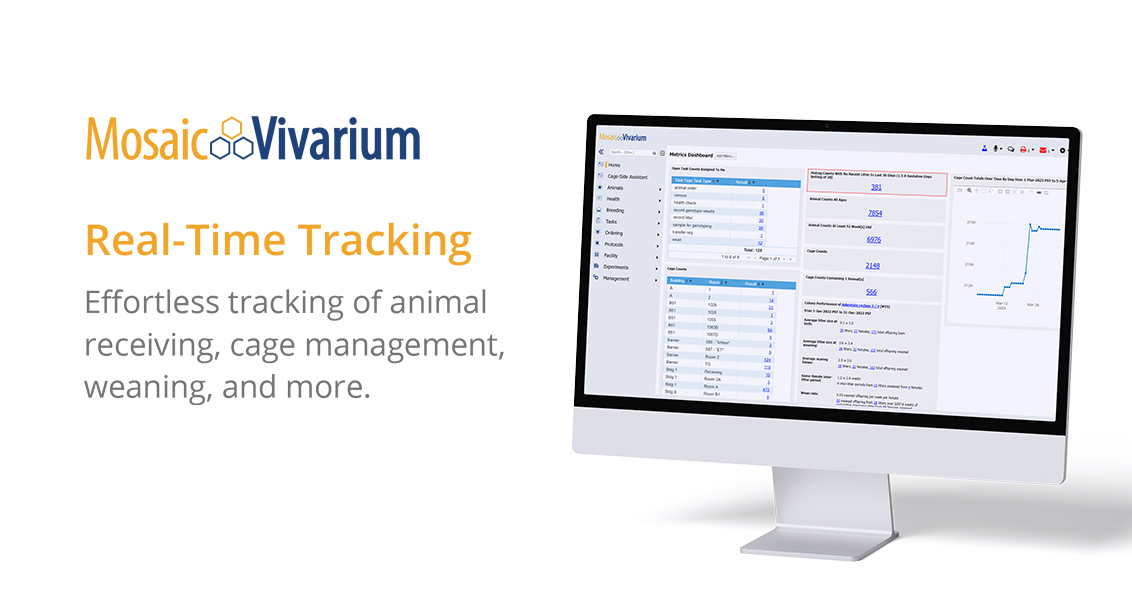
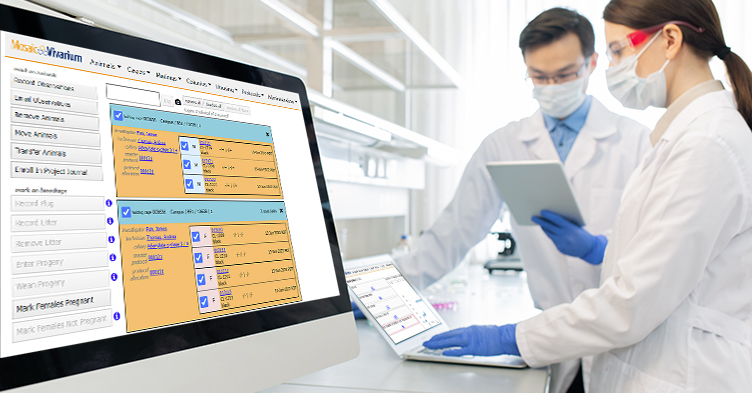
This is where a system like Mosaic Vivarium changes the equation. When data is captured once, at the source, and flows automatically to wherever it’s needed next, the duplicate work disappears, along with the errors and delays that come with it.
Curious what your facility could reclaim? Schedule a free demonstration today of Mosaic Vivarium and see how much time, accuracy, and staff energy you can save.